
THE LAST TICKET STUB
Jim Marshall, The Beatles, and the Day History Didn't Know It Was History Yet • One-Take Wonders: The Final Bonus Edition • Impossible Music Trivia

* THE HARDEST WORKING NEWSLETTER IN SHOW BUSINESS *
All the news that’s fit to be tied
Subscribe via RSS feed musicwire.substack.com/feed
June 4, 2026
THE LAST TICKET STUB
Jim Marshall, The Beatles, and the Day History Didn’t Know It Was History Yet
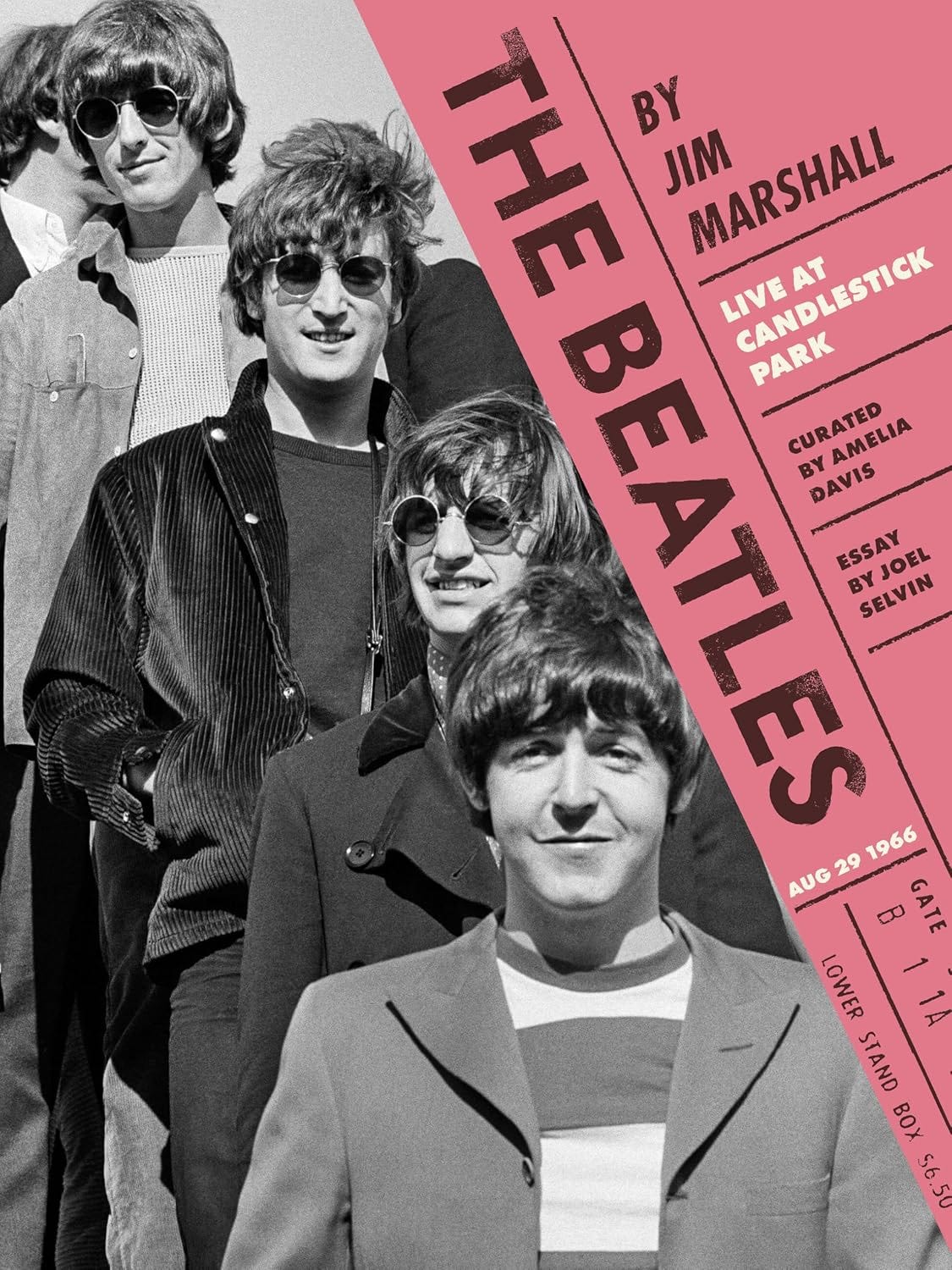
By David Gross, Punmaster MusicWire
Sometimes history arrives wearing a tuxedo.
Sometimes it arrives carrying a protest sign.
And sometimes history knows exactly who it wants holding the camera.
On August 29, 1966, The Beatles walked onto a windswept baseball field at San Francisco’s Candlestick Park and played what was supposed to be just another stop on a grueling American tour.
Chosen by The Beatles themselves as the official photographer for the event, Jim Marshall occupied a position no one else did.
He wasn’t one of many photographers covering the show.
He was the photographer.
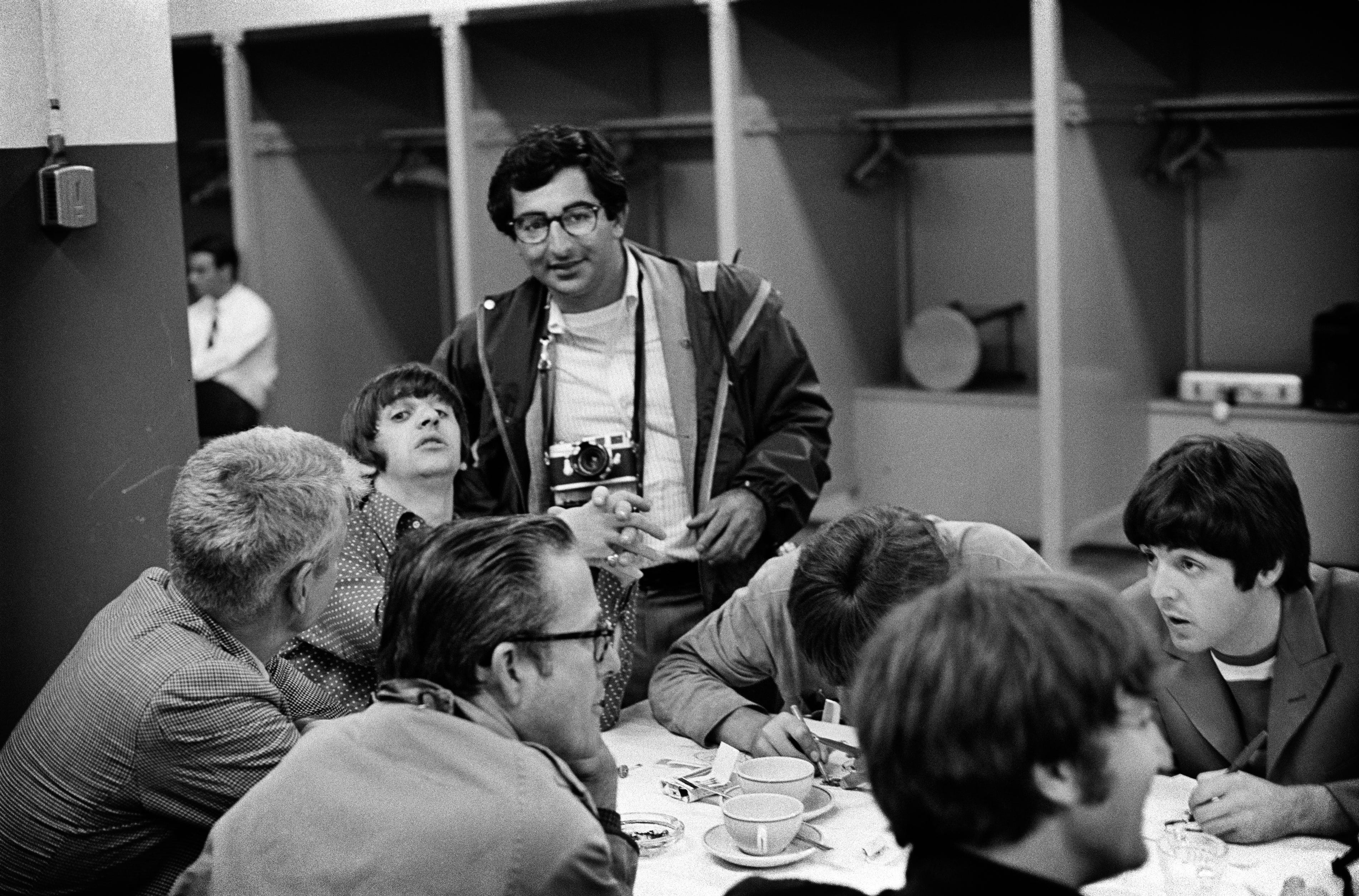
The only photographer granted backstage access.
The only lens documenting both the public spectacle and the private moments behind it.
Nobody knew they were closing the book.
Not the screaming fans.
Not the promoters.
Not the reporters.
Not even the four Beatles themselves.
But Jim Marshall was standing exactly where history was about to happen.
The newly released hardcover The Beatles by Jim Marshall: Live at Candlestick Park 1966, authored by Amelia Davis, featuring the photography of Jim Marshall and an essay contribution from longtime San Francisco music journalist Joel Selvin, is much more than another Beatles photo collection.
Beatles books already occupy enough shelf space to build a small retaining wall.
What makes this one different is that Marshall wasn’t merely photographing a concert.
He was photographing a turning point.
A fault line.
The exact moment popular music quietly shifted gears.
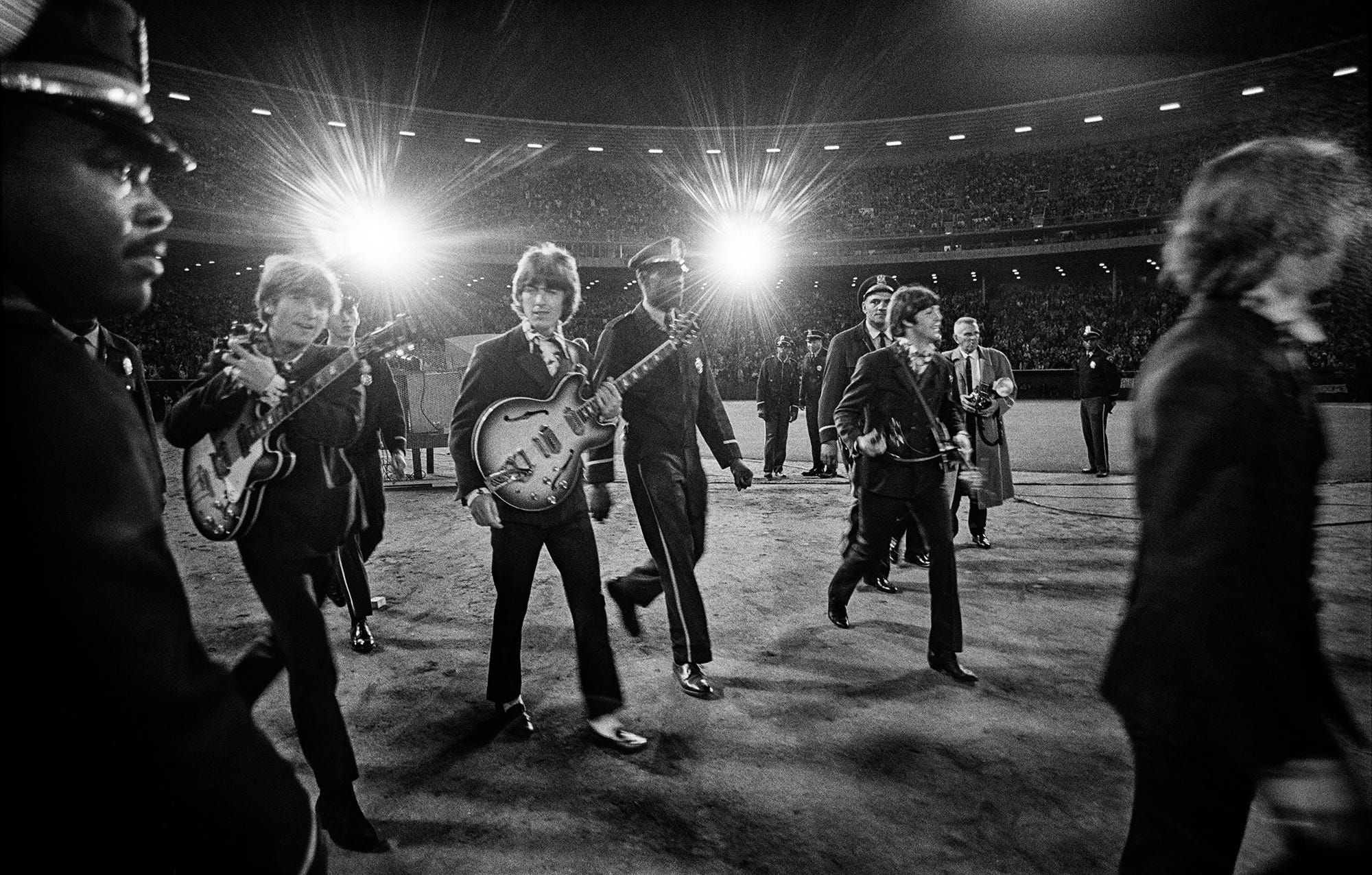
As fate would have it, Candlestick Park became the final paid public concert The Beatles would ever perform.
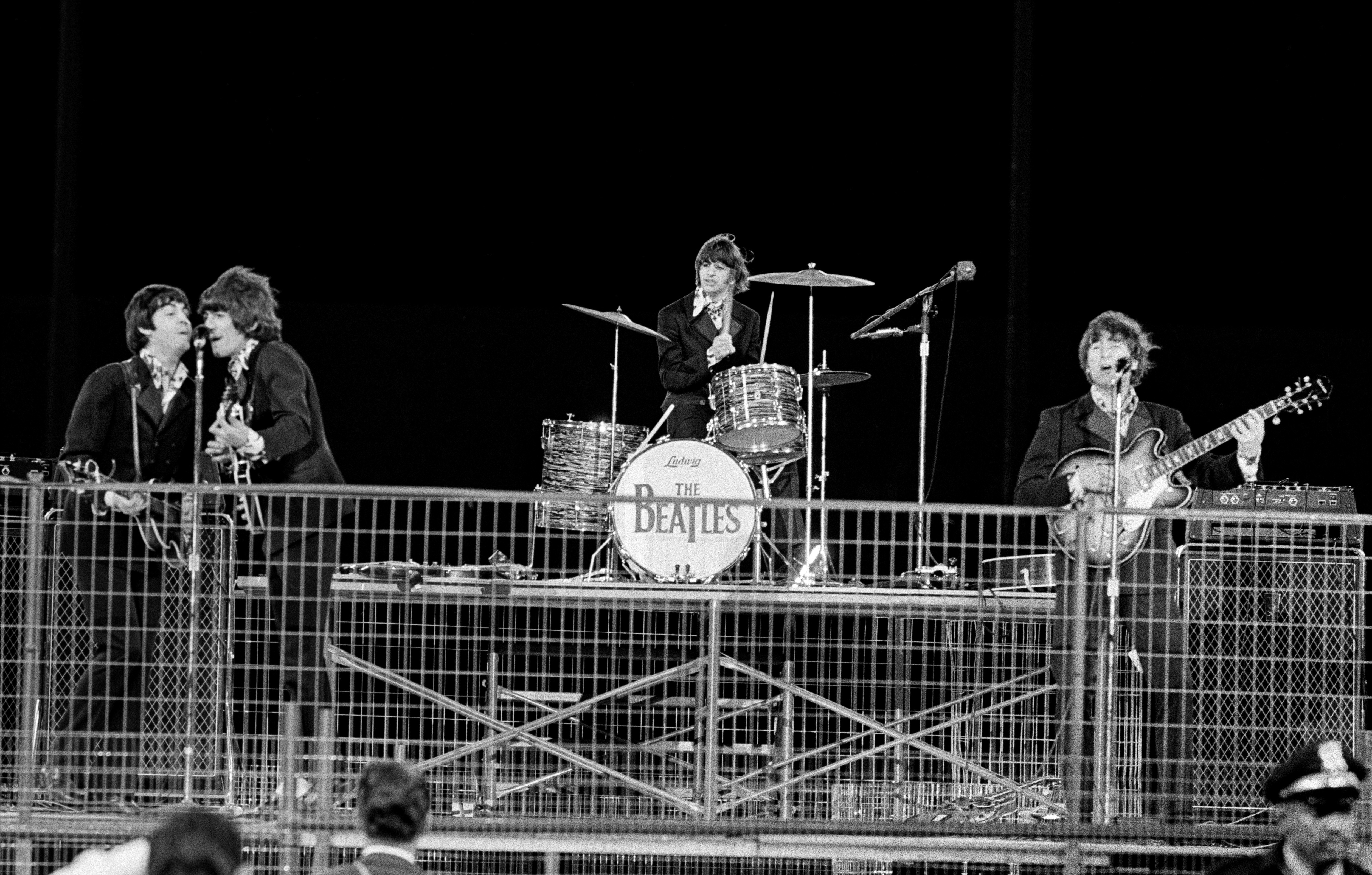
The last ticket sold.
The last stage entrance.
The last bow.
The last time Beatlemania had a live target.
Marshall’s presence wasn’t accidental.
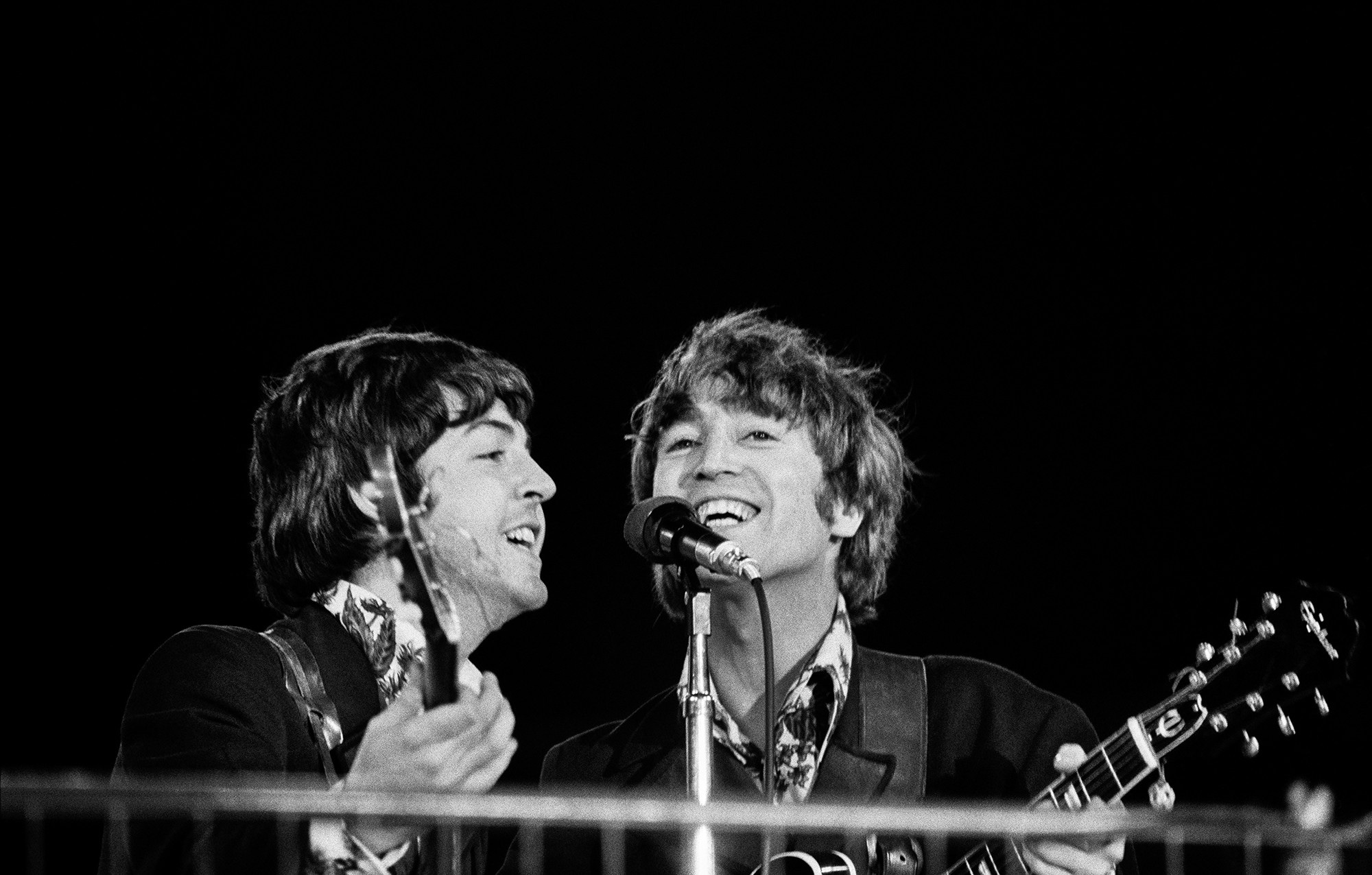
The Beatles selected him to photograph the concert, making him the only photographer granted backstage access and the only visual witness entrusted to document the band’s final public performance from the inside.
Think about that.
Not one of dozens.
Not one among a swarm.
The only one.
The result is less like a photo book and more like a time machine with pages.
What has always separated Jim Marshall from many photographers wasn’t technical skill alone. Plenty of people could expose film properly.
Marshall had something rarer.
He belonged.
Musicians trusted him.
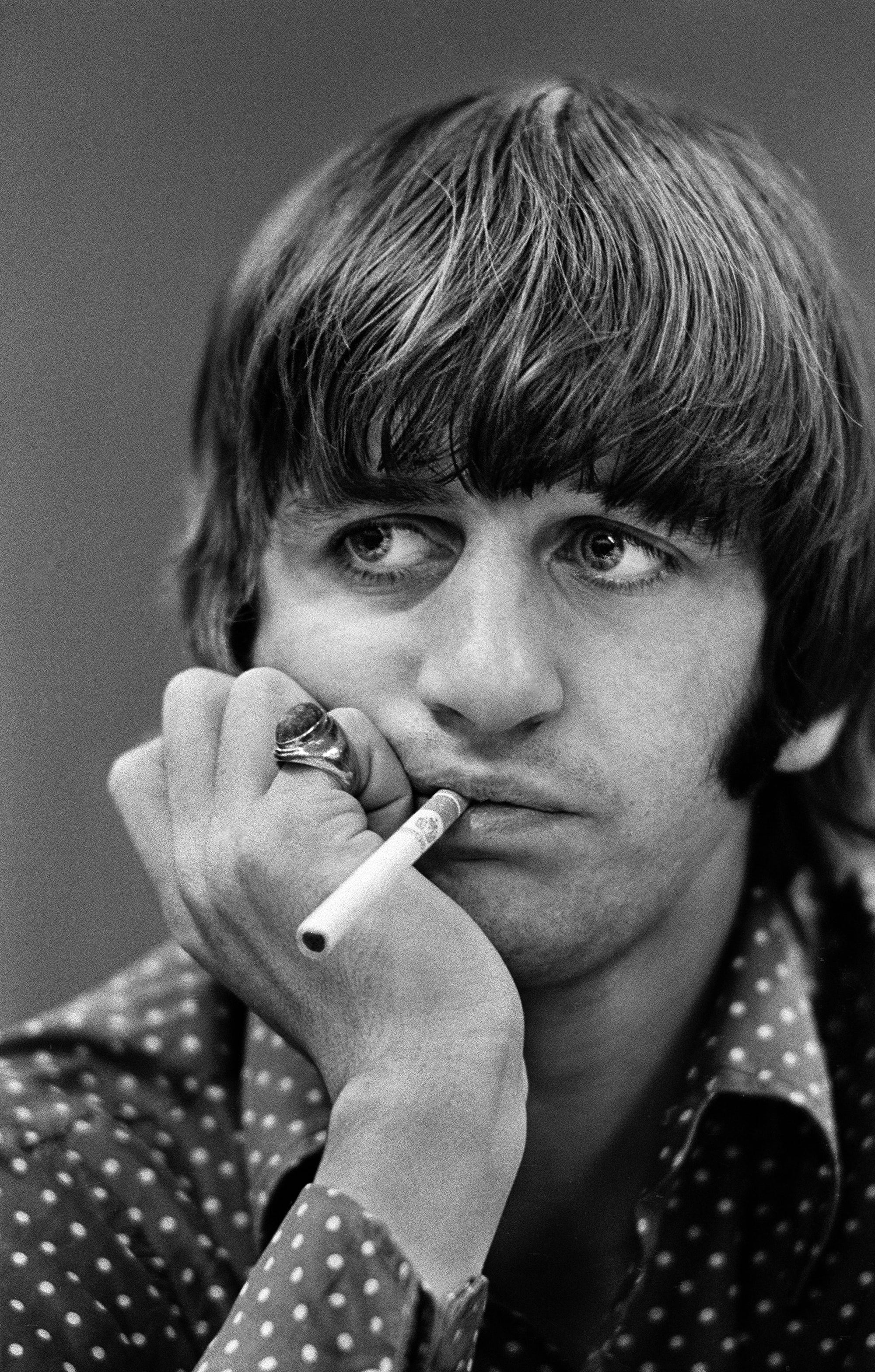
Artists let him into rooms where cameras were normally unwelcome.
He wasn’t standing outside the glass looking in.
He was already inside.
That distinction explains why his photographs feel less like documentation and more like participation.
When Marshall photographed Johnny Cash flipping the bird at San Quentin, he wasn’t creating an image.
He was preserving a personality.
When he photographed Jimi Hendrix at Monterey, Janis Joplin backstage, Miles Davis in thought, or The Band in conversation, he captured the humanity hiding behind mythology.
The same thing happens throughout this Candlestick collection.
These aren’t merely photographs of The Beatles.
These are photographs of four young men standing at the edge of a cliff they don’t quite realize they’re about to jump from.
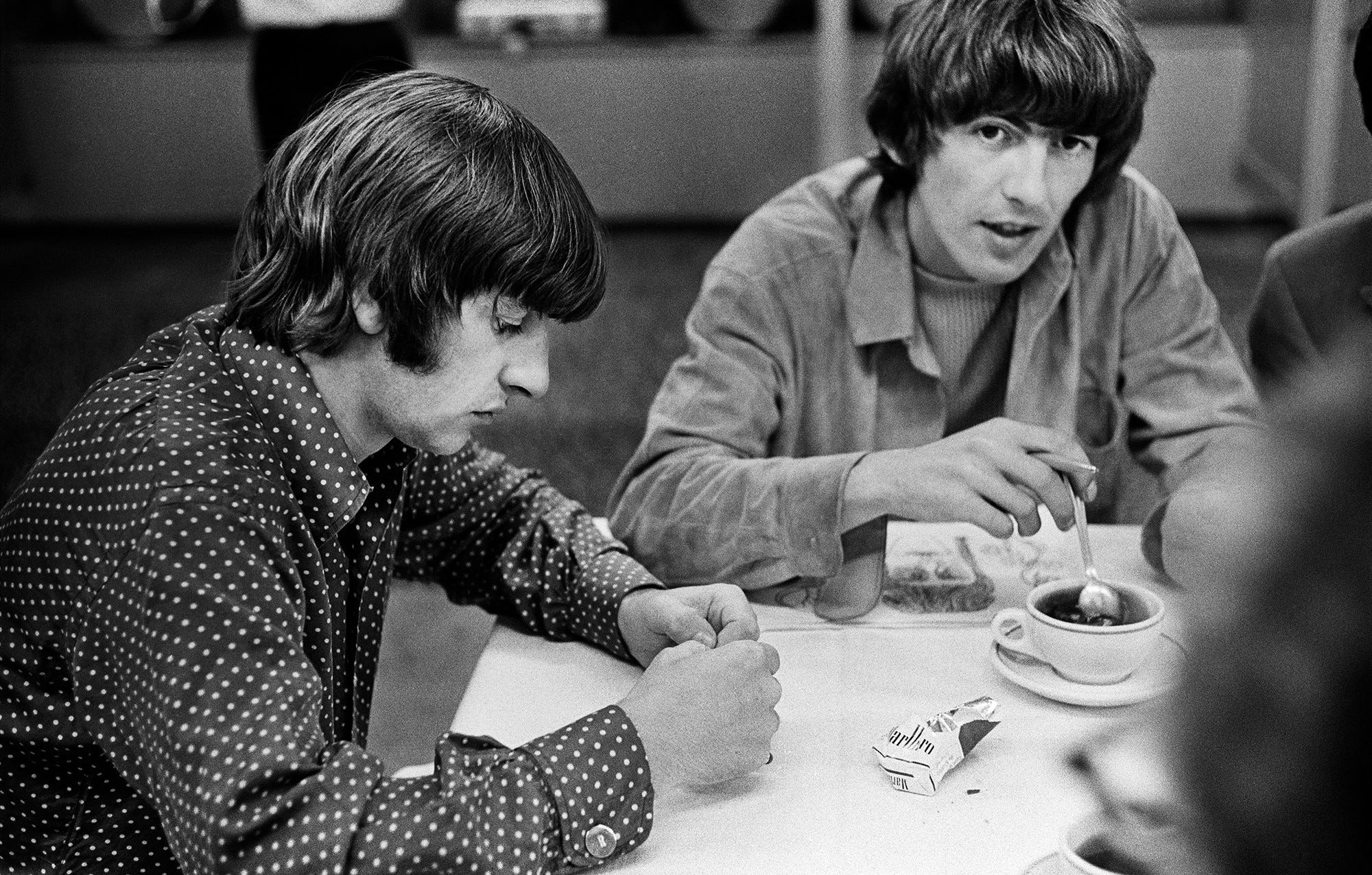
Looking through the images today, knowing what happened next, creates a fascinating tension.
Within months they would retreat from touring forever.
Soon came Sgt. Pepper.
Soon came the studio years.
Soon came the era where The Beatles became less a band than a creative laboratory.
But Marshall caught them in the final moments before that transformation.
Still wearing the uniforms.
Still facing the crowds.
Still doing the job.
The proof sheets included in the book may be among its greatest treasures.
Proof sheets reveal how photographers think.
You see what they saw.
What they rejected.
What they chased.
What almost became the iconic image but didn’t.
They’re the rough drafts of history.
The outtakes before the legend gets edited.
For photography lovers, that’s gold.
For Beatles fans, it’s catnip.
For historians, it’s evidence.
Davis, who has carefully stewarded Marshall’s photographic legacy for years, assembles more than 150 photographs and proof sheets into a volume that feels both archival and immediate. Roughly half of the images have never been published before. Selvin’s accompanying essay provides historical context, but the real narrator remains Marshall’s camera, guiding readers through a day that became one of rock and roll’s most consequential farewells.
The backstage images may ultimately prove even more compelling than the concert photographs themselves.
Here are The Beatles meeting Joan Baez and her sisters, Mimi Fariña and Pauline Marden, one of those unlikely backstage encounters that only gains significance as the years pass.
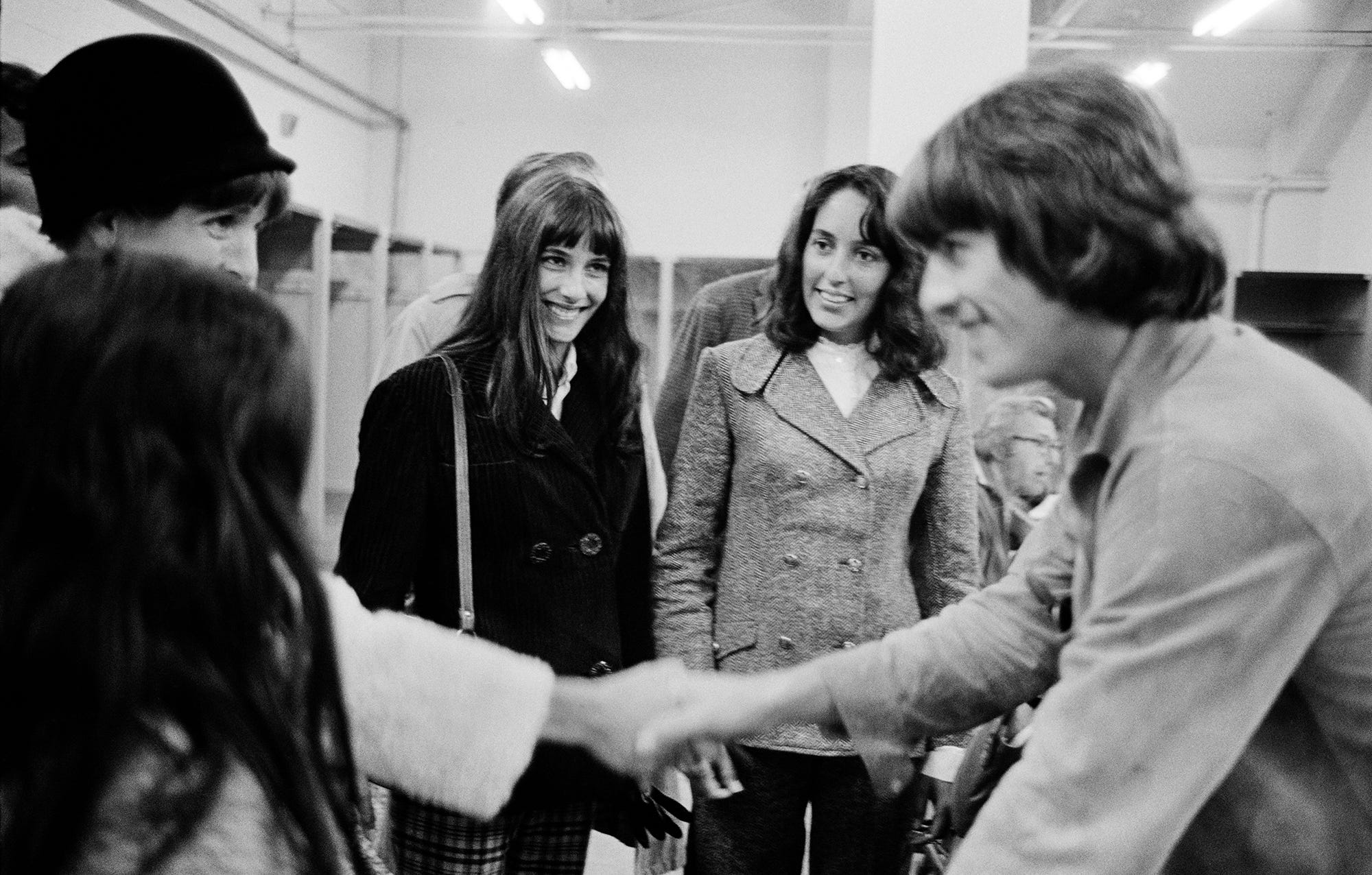
Here they are waiting.
Talking.
Existing.
Not posing for posterity.
Just being there.
And that’s where Marshall’s greatest gift emerges.
He somehow made famous people look human without making them look ordinary.
That is a surprisingly difficult trick.
The best photographs don’t tell us what happened.
They tell us what it felt like.
Marshall understood that instinctively.
Maybe that’s why musicians trusted him.
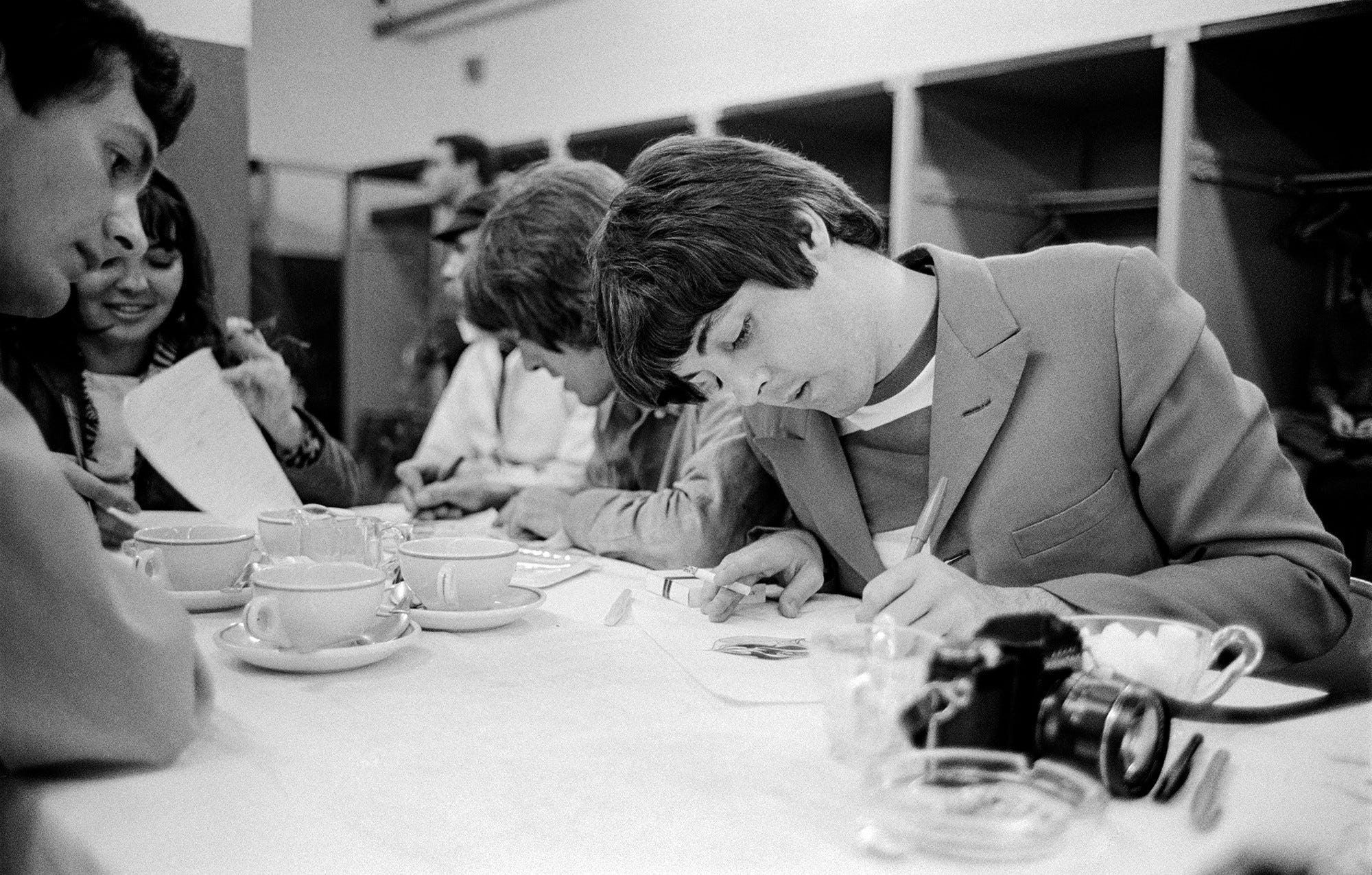
Maybe that’s why his photographs continue to feel alive decades after the shutter clicked.
And maybe that’s why this book arrives with such perfect timing.
August 2026 marks sixty years since Candlestick Park.
An entire lifetime has passed.
The stadium is gone.
The band is gone.
The era is gone.
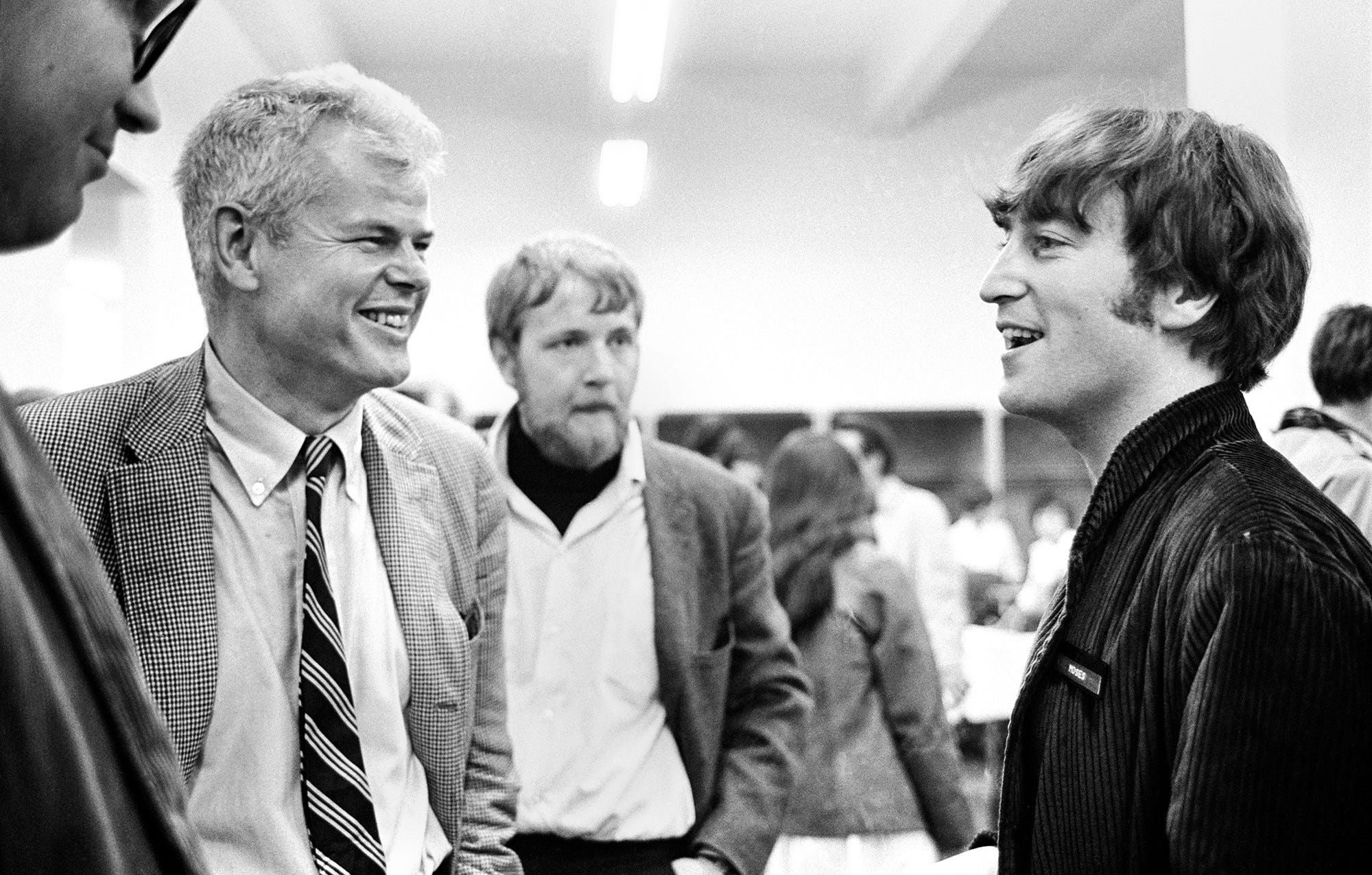
Yet the photographs remain stubbornly present.
Frozen evidence that for one evening in San Francisco, the biggest band in the world stood at the end of one road and unknowingly at the beginning of another.
It’s fitting that Jim Marshall was there.
Marshall was a San Francisco original.
Part street philosopher.
Part storyteller.
Part troublemaker.
Part journalist.
All character.
He possessed the gift of gab, a larger-than-life personality, and a knack for somehow ending up exactly where history was about to happen, usually with his trademark Leica slung over his shoulder.
Most photographers document culture.
Jim Marshall lived inside it.
And it wasn’t just The Beatles.
Marshall’s lens found The Ronettes, Joan Baez, Bob Dylan, Johnny Cash, Janis Joplin, Grateful Dead, Miles Davis, Jimi Hendrix, and virtually every major musical force that passed through San Francisco and beyond during rock and roll’s most explosive decades.
Again and again, he seemed to be standing precisely where history was unfolding.
This new volume reminds us that his greatest photographs were never simply about famous people.
They were about moments.
And moments are fragile things.
One second they’re ordinary.
The next they’re history.
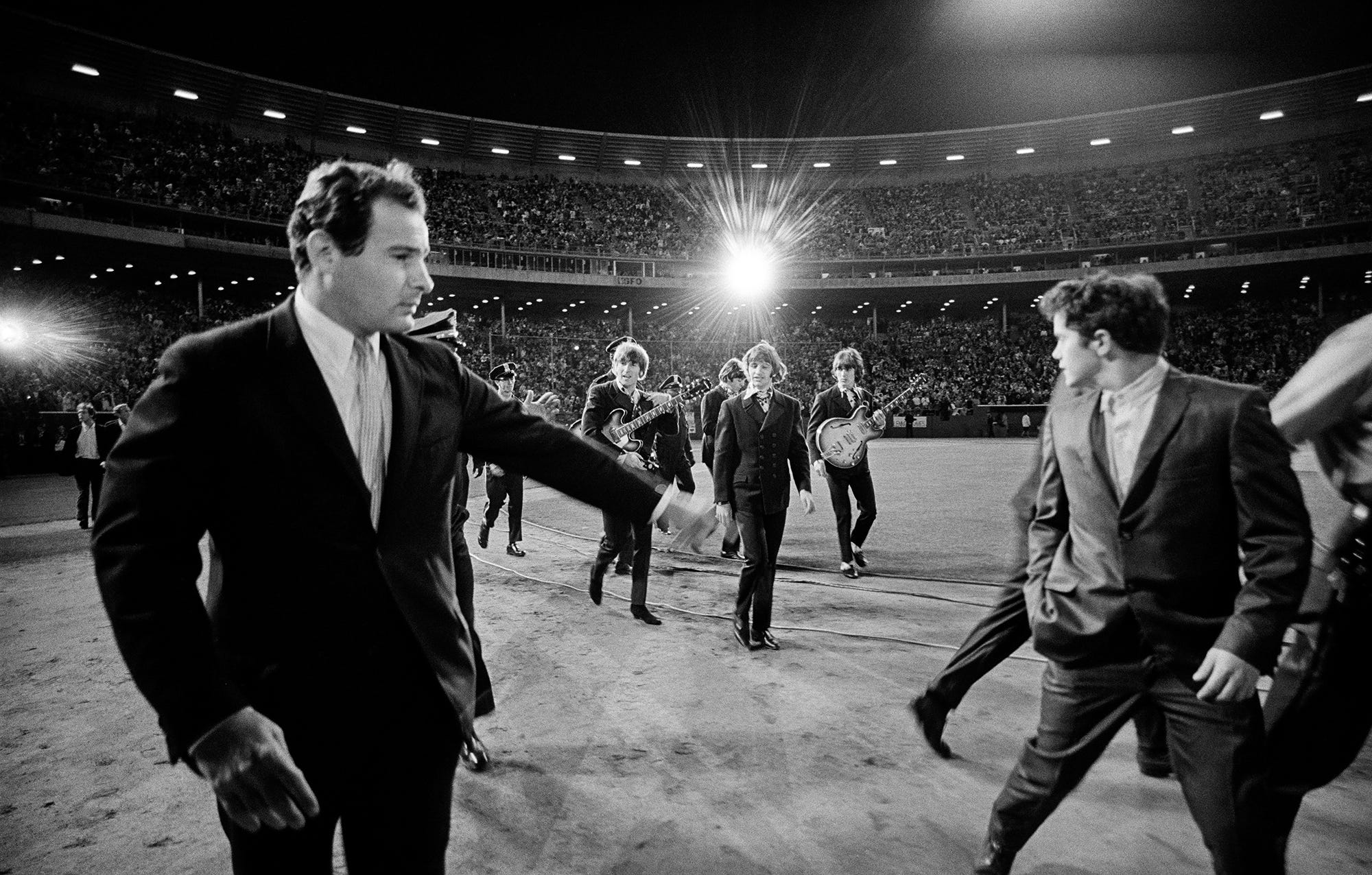
At Candlestick Park in 1966, The Beatles played one more show.
Jim Marshall took one more picture.
The band walked offstage.
The crowd went home.
Nobody knew the curtain had fallen.
But somewhere inside a camera bag, history was already developing.
Pick up your copy of The Beatles by Jim Marshall today.
THE MISTAKES THEY KEPT
ONE-TAKE WONDERS — THE FINAL BONUS EDITION
False Starts, Wrong Notes, Chair Squeaks, Clunks, Count-Ins, Rogue Noises, and the Beautiful Human Errors That Somehow Made Great Records Even Better
By David Gross, Punmaster MusicWire
The modern recording studio is built around a simple idea:
Fix it.
Punch it in.
Tune it.
Move it.
Replace it.
Erase it.
Perfect it.
Yet some of the most beloved moments in music history survived because nobody did.
A laugh was left in.
A voice cracked.
A singer forgot the words.
A musician counted off too loudly.
A piano player hummed along with himself.
A drummer’s pedal squeaked.
A band blew the opening and started over.
And somewhere along the way, those imperfections became part of the music itself.
The following aren’t necessarily the greatest songs ever recorded.
They’re the recordings that remind us real people were standing in the room when the red light came on.
The Famous False Start — “Bob Dylan’s 115th Dream” (1965)
The band starts.
Or at least they try to.
A false beginning immediately collapses.
Laughter breaks out.
Dylan laughs.
Everybody resets.
Most artists would have demanded another opening.
Instead, the mistake became the introduction.
The false start lasts only a few seconds, but it perfectly sets the tone for one of Dylan’s most delightfully off-kilter recordings.
Before a single lyric arrives, listeners are reminded that great records are made by human beings.
The Piano Accident — “Roxanne” (1978)
One of the most famous happy accidents in rock history occurs before the song even begins.
While preparing for a take, Sting accidentally sat on a piano keyboard.
The resulting cluster of notes was followed by laughter.
The producer heard it.
The band heard it.
Nobody removed it.
To this day, the accidental piano chord and Sting’s chuckle remain part of the opening seconds of one of The Police’s signature recordings.
Sometimes the mistake makes the introduction.
The Squeaky Pedal — “Since I’ve Been Loving You” (1970)
Led Zeppelin delivered one of the most emotionally charged blues performances of their career.
They also delivered a squeak.
Throughout the song, listeners can hear a bass drum pedal chirping away beneath Jimmy Page’s guitar and Robert Plant’s anguished vocal.
Once somebody points it out, you’ll hear it forever.
Yet nobody wants it removed.
The squeak has become as much a part of the record as the guitar solo.
The Voice That Broke — “Gimme Shelter” (1969)
Merrie Clayton arrived late at night and delivered one of the most unforgettable guest performances in rock history.
Then her voice cracked.
On paper, it was an imperfection.
In practice, it became the emotional high point of the record.
The crack stayed.
So did the chills.
The Laugh in the Grass — “Brown Eyed Girl” (1967)
Listen carefully during the line about “making love in the green grass.”
There’s a laugh.
A genuine, unscripted moment.
Van Morrison loses composure for a split second.
The tape keeps rolling.
That tiny laugh has survived nearly sixty years of radio play.
A fleeting human moment preserved forever.
The Count-In That Stayed — “I Saw Her Standing There” (1963)
“One, two, three, FAH!”
Paul McCartney’s famous count-in wasn’t intended to become one of the most recognizable openings in popular music.
Yet there it remains.
The Beatles could have trimmed it.
Instead, it became the launch pad.
The song doesn’t feel like it starts.
It feels like it explodes.
The Near-Miss — “If I Fell” (1964)
Even The Beatles weren’t perfect.
During one vocal passage, John Lennon and Paul McCartney briefly stumble.
For a fraction of a second, they’re not quite together.
Then they recover.
The moment remains on the finished recording.
Most listeners never notice.
Musicians notice immediately.
The Beautiful Mess — “Louie Louie” (1963)
Few hit records sound less polished.
The vocals are rough.
The timing wobbles.
The performance feels as though it might derail at any moment.
Yet that very looseness became its superpower.
Rock and roll has spent decades trying to sound this spontaneous.
Very few records ever succeeded.
The Singer Who Forgot the Words — “Mack the Knife” (1960)
Live in Berlin, Ella Fitzgerald suddenly lost track of the lyrics.
Many performers would panic.
Ella improvised.
She joked.
She invented new lines.
She turned a mistake into a master class.
The audience loved it.
The recording won a Grammy.
Not bad for a forgotten lyric.
One Word Changed Everything — “Tequila” (1958)
The song was originally little more than an instrumental groove.
Then came the famous shout:
“Tequila!”
One word.
One spontaneous flourish.
One unforgettable hook.
Without it, the song might be a footnote.
With it, the song became immortal.
The Sound of the Room — “A Day in the Life” (1967)
Listen closely and you’ll hear breathing.
Movement.
Studio noises.
The subtle sounds of human beings occupying physical space.
Far from distracting, those details make the record feel alive.
Like you’re witnessing an event rather than hearing a recording.
The Unwanted Duet — Glenn Gould and Bach
Recording engineers tried everything.
Microphone placement.
Technical tricks.
Isolation.
Nothing worked.
Pianist Glenn Gould hummed while he played.
Constantly.
The humming leaked onto countless recordings, including his legendary performances of Bach’s Goldberg Variations.
Eventually the engineers surrendered.
The humming remained.
A second voice inside the music.
Annoying.
Charming.
Completely inseparable from Glenn Gould.
The Crowd Becomes the Arrangement — “The Load-Out” (1977)
Jackson Browne’s farewell-to-the-road masterpiece succeeds partly because it doesn’t hide the stage.
You hear the audience.
You hear the environment.
You hear the reality of musicians packing up after another night on tour.
The atmosphere isn’t background noise.
It’s part of the composition.
The Fade That Refused to End — “Suspicious Minds” (1969)
Near the end, Elvis Presley appears to be fading away.
Then suddenly he’s back.
The record fades.
Returns.
Fades again.
It’s one of pop music’s most unusual endings.
A production decision that felt almost accidental, yet became inseparable from the song itself.
Breathing Room — “The Boxer” (1969)
Modern recordings often remove every trace of effort.
Not this one.
You hear breaths.
Movement.
Presence.
The sounds don’t distract from the performance.
They remind you there is a performer.
Sometimes that’s the difference between hearing a song and feeling one.
The Last Groove
Today’s software can remove almost anything.
The squeak.
The cough.
The breath.
The laugh.
The wrong note.
The accidental noise.
Yet music lovers continue to treasure the moments that escaped deletion.
Because perfection may impress us.
But humanity connects with us.
The false start before Dylan.
The laugh before “Roxanne.”
The squeaky pedal beneath Led Zeppelin.
The crack in Merrie Clayton’s voice.
The count-in.
The forgotten lyric.
The hum.
Tiny flaws.
Permanent magic.
Proof that sometimes the best take is the one that wasn’t quite perfect.
A blast from the past
Thanks to Kiva and Scott
THE PUNMASTER by David Gross
TODAY'S EASY-BAKE TRIVIA QUESTION
WHO AM I?
I won a national championship twice before I was old enough to vote.
I earned a pilot’s license at age 23 and eventually owned my own airplane.
I was inducted into a hall of fame in a field where many people considered me an outsider.
Millions of people watched me every week, yet many never realized I was among the most accomplished practitioners of my craft.
Who am I?
The answer will appear in the next MusicWire...
The trivia question from the last MusicWire was:
WHAT DO THESE BANDS HAVE IN COMMON?
The Doors
Led Zeppelin
Black Sabbath
Boston
Ramones
Van Halen
Answer: Their debut albums were self-titled.
Thanks to this week’s winners Jack Pott, Mark Cohen
TURN UP THE FUN!
It's The Rockabilly Roadhouse with Big Dave
Saturdays • 9AM–11AM (Pacific)
Two turbo-charged hours of high-octane roots, rockabilly & revved-up classics!
Rebroadcast Saturday nights at 7PM
Kickstart your weekend—guaranteed.
Listen live at KRSH.com
Download the free KRUSH mobile app
Or tune in to 95.9 The Krush in Sonoma County, CA
Tell 40 or 50 of your closest friends!
Check out the web site at rockabillyroadhouse.com
It's time to get down to the Main Gazane with Big Dave!

Big Dave Presents:
The Saturday Night Album Trax
Saturdays 9pm-10pm (Pacific) on the KRUSH 95.9 FM
BREAK OUT THE HEADPHONES!
Hosted by Big Dave, the Saturday Night Album Trax features some of the greatest albums ever recorded. Deep cuts, live albums, extended tracks, rarities and themes. Plus get the background and inside stories on these classic albums.
These are the good old days!
STREAM IT LIVE at KRSH.com
THIS DAY IN MUSIC

You Can Quote Me On That…
“I’m a part of the I like ice cream watermelon soup generation.” ~ Allen Ginsberg
“Rock journalism is people who can’t write interviewing people who can’t talk in order to provide articles for people who can’t read.” - Frank Zappa
“The older you get, the better you were!” - Leslie West
“I opened the door for a lot of people, and they just ran through and left me holding the knob.” - Bo Diddley
“I’m as country as a dozen eggs.” - Elvin Bishop
“Elvis may be the King of Rock and Roll, but I am the Queen.” - Little Richard
“If you think you are too old to rock ‘n roll, then you are.” - Lemmy Kilmister
"If you tried to give rock and roll another name, you might call it 'Chuck Berry’.” - John Lennon
“The old-timers schooled me good. They brainwashed me to respect music, whether we were playing rockabilly or blues or rock and roll.” - Dr. John
“It’s much too late to do anything about rock & roll now ...” - Jerry Garcia
“Hippies? Why, I’m the original.” - Jerry Lee Lewis
"David Gross (Punmaster MusicWire) is the Arianna Huffington of music news!" - Barry "The Fish" Melton
"Rock and roll is here to stay.” - Neil Young
“The reason kids like rock ‘n roll is their parents don’t.” - Mitch Miller
“Rock ’n roll is really swing with a modern name. It began on the levees and plantations, took in folk songs, and features blues and rhythm. It’s the rhythm that gets to the kids – they’re starved of music they can dance to, after all those years of crooners.” - Alan Freed
“If I were not a physicist, I would probably be a musician. I often think in music. I live my daydreams in music. I see my life in terms of music.” - Albert Einstein
“The music business is a cruel and shallow money trench, a long plastic hallway where thieves and pimps run free, and good men die like dogs. There’s also a negative side.” - Hunter S. Thompson
"Mike Love, not war." - Scott Mathews
"I have outlived my dick" - Willie Nelson (2008)
TO SEE A SLEW OF QUOTES VISIT PUNMASTER.COM
Visit the archive: https://musicwire.substack.com/archive
Subscribe via RSS feed musicwire.substack.com/feed
That was fun, Mike....always a pleasure.
Great lead, Dave. And good seeing you last night at peacetown